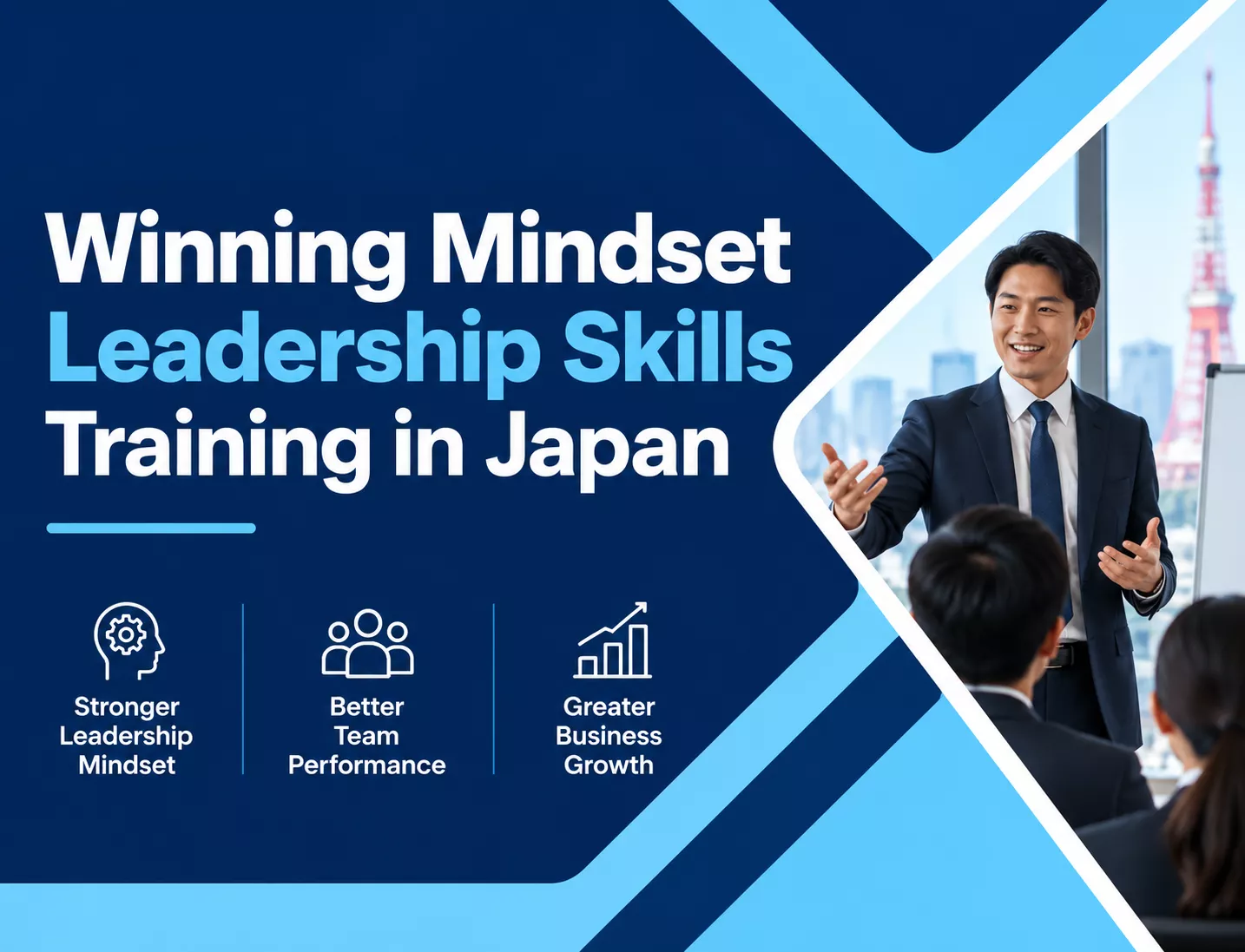
Japan’s business landscape is undergoing a structural transformation. Navigating complex cross-border partnerships, shifting workforce dynamics, and intensifying global competition requires modern corporate executives to move beyond traditional management routines. Success today demands a strategic Winning Mindset—a mental framework built on resilience, decisive action, and commercial agility.
Targeted Winning Mindset Training in Japan empowers leaders to align cultural nuances with high-performance execution, unlocking sustainable growth across domestic and international markets.
Understanding the Winning Mindset in Japanese Corporate Culture
In the context of modern commercial leadership, a Winning Mindset is the psychological commitment to continuous improvement (kaizen), strategic risk-taking, and outcome-oriented execution. While traditional corporate culture prioritizes consensus (nemawashi) and risk mitigation, a winning leadership framework blends these foundational values with speed, accountability, and bold goal-setting.
Executives who cultivate this approach focus on three key pillars:
-
Psychological Resilience: Turning market disruptions and complex client challenges into growth opportunities.
-
Proactive Commercial Ownership: Moving from reactive management to proactive value creation.
-
Cross-Cultural Agility: Bridging local business protocols with global commercial expectations.
Bridging Mindset with Strategy: Key Account Management (KAM)
Developing a winning leadership philosophy is only half the equation; leaders must apply this momentum to strategic client relationships. This is where high-impact Key Account Management Training in Japan becomes essential for corporate growth in Japan.
Enterprise accounts in Japan require deep trust, long-term relationship nurturing, and multi-stakeholder navigation. Integrating Winning Leadership Training with advanced Key Account Management (KAM) principles ensures sales leaders and account executives move from transactional vendors to indispensable strategic partners.
| Strategic Capability | Traditional Account Approach | Winning Mindset & Strategic KAM |
| Client Relationship | Vendor / Service Provider | Trusted Strategic Advisor |
| Focus | Product Features & Price | Mutual Value Creation & Enterprise Growth |
| Sales Cycle | Reactive Bid Submission | Proactive Account Co-Innovation |
| Leadership Dynamic | Siloed Execution | Cross-Functional Alignment |
Why Choose Halifax Consulting for Leadership Development in Japan?
Halifax Consulting specializes in transforming commercial performance through tailored, practical, and highly contextual learning solutions across the Asia-Pacific region.
Our Winning Mindset Training in Japan combines behavioral science, real-world case simulations, and enterprise strategic planning to deliver measurable business impact.
-
Tailored Programs: Modules customized to your specific industry dynamics, enterprise account structure, and organizational culture.
-
Practical Application: Heavy emphasis on practical role-plays, real-account planning, and executive coaching over passive lecture theory.
-
Integrated Skillsets: Unified training paths combining leadership confidence, negotiation mastery, and Key Account Management Training.
Frequently Asked Questions (FAQ)
What is Winning Mindset Training in Japan?
Winning Mindset Training in Japan is a specialized executive development program designed to enhance business resilience, strategic leadership, confidence, and commercial execution for managers operating in the Japanese market.
How does Key Account Management Training integrate with leadership skills?
Key Account Management (KAM) Training provides the strategic tools needed to manage complex high-value relationships, while leadership training builds the confidence, negotiation posture, and team alignment necessary to execute those plans effectively.
Who should attend Halifax Consulting's corporate leadership programs?
Our programs are designed for senior executives, sales directors, key account managers, business unit heads, and high-potential leaders looking to scale enterprise revenue and team performance

Jerome Teng